Popularly known as yathOkthakAri sannidhi, this dhivya dhEsam is located in kAnchIpuram.
In this dhivya dhEsam, emperumAn is in a lying down posture. He descended here to facilitate brahmA complete his yagyam. When brahmA was conducting a yagyam without his wife saraswathy, saraswathy becomes very upset, assumes the form of a river named vEgavathy, flows with great force towards the yagya vAtikA (the place of the yagyam) with the intention to completely wipe it off. brahmA prays to SrIman nArAyaNan to protect the yagyam and emperumAn descends here in his lying down posture and stays as a protective boundary for the yagyam. vEgavathy river fails to breach emperumAn and thus emperumAn becomes to be known as vEgasEthu (dam/bridge that stopped vEgavathy river).
This dhivya dhEsam is the birth place of poigai AzhwAr (the first of AzhwArs). The pond from which poigai AzhwAr appeared is still preserved in this dhivya dhEsam.
When Thirumizhisai Alwar was living in Kanchipuram, a very old lady (Daasi) used to clean his house daily and did this as a small favour for him. On becoming happy with the favour she is doing daily to him, Azhwar changed her from an old lady to a beautiful woman. After this, wondering at the beauty, the king married the woman and she became the queen of the place.
On hearing the secret, the king eagerly met Thirumizhisai Alwar and asked his follower, Kani Kannan, to have the Alwar sing a poem praising the king. Kani Kannan refused, stating all songs belong to Srivaikundanathan. The king, enraged by the refusal to praise humans despite offerings of gold and silver, ordered Kani Kannan to quit Kanchipuram.
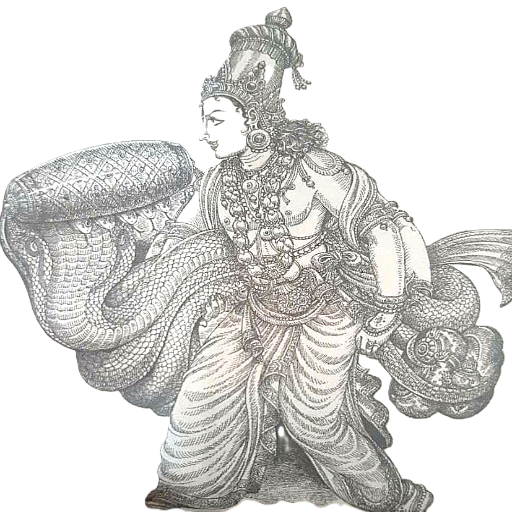
Thirumizhisai Alwar decided to leave with his follower. He sang to Yadhothakari Perumal: "Kani Kannan is leaving, I am also leaving. Get up from your serpent bed, roll it up, and let us quit Kanchi." The Perumal obeyed and followed them out.
Realizing his mistake as the city lost its divine presence, the king begged them to return. Upon their return, Alwar sang again, asking the Perumal to return to his bed. Because the Lord obeyed the words of the Alwar, He is called “Sonna Vannam seitha Perumal” (The Lord who did as He was told).
vEdhAnthAchAryar compiled vEgAsEthu sthOthram in glorification of yathOkthakAri emperumAn.
Subsequently, maNavALa mAmunigaL arrives here to perform mangaLAsAsanam to the emperumAn here. Per the orders of his AchAryan thiruvAimozhi piLLai, he studies SrI bhAshyam under the guidance of kidAmbi nAyanAr in this dhivya dhEsam. During the course of his study, nAyanAr becomes amazed at mAmunigaL's ability to grasp the principles and wonders about the true identity of mAmunigaL. mAmunigaL reveals his true Adhi sEsha form to kidAmbi nAyanAr at this time and kidAmbi nAyanAr becomes amazed to learn about the true identity of mAmunigaL.